
Raw, unblended · Noosa
Raw Noosa honey.
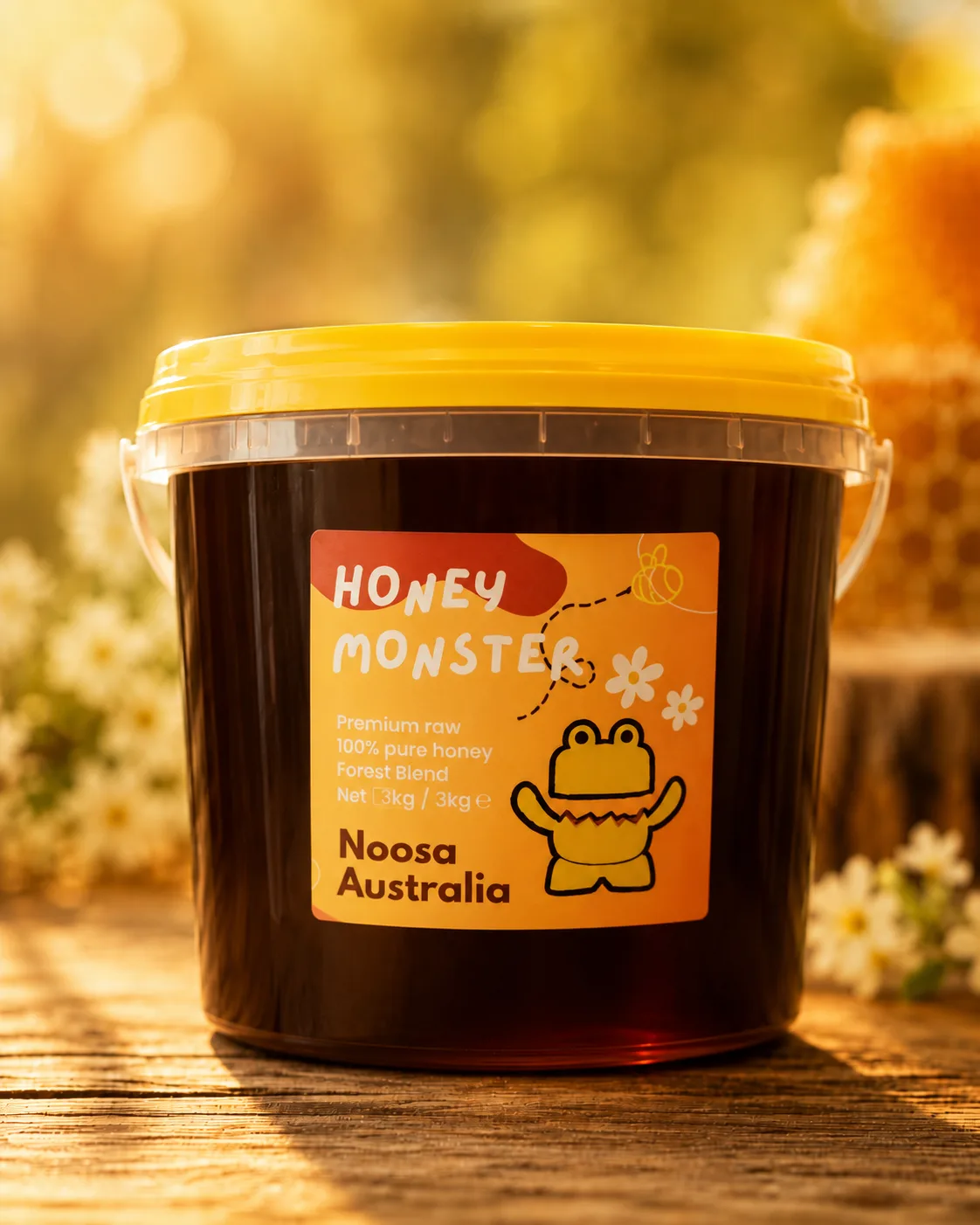
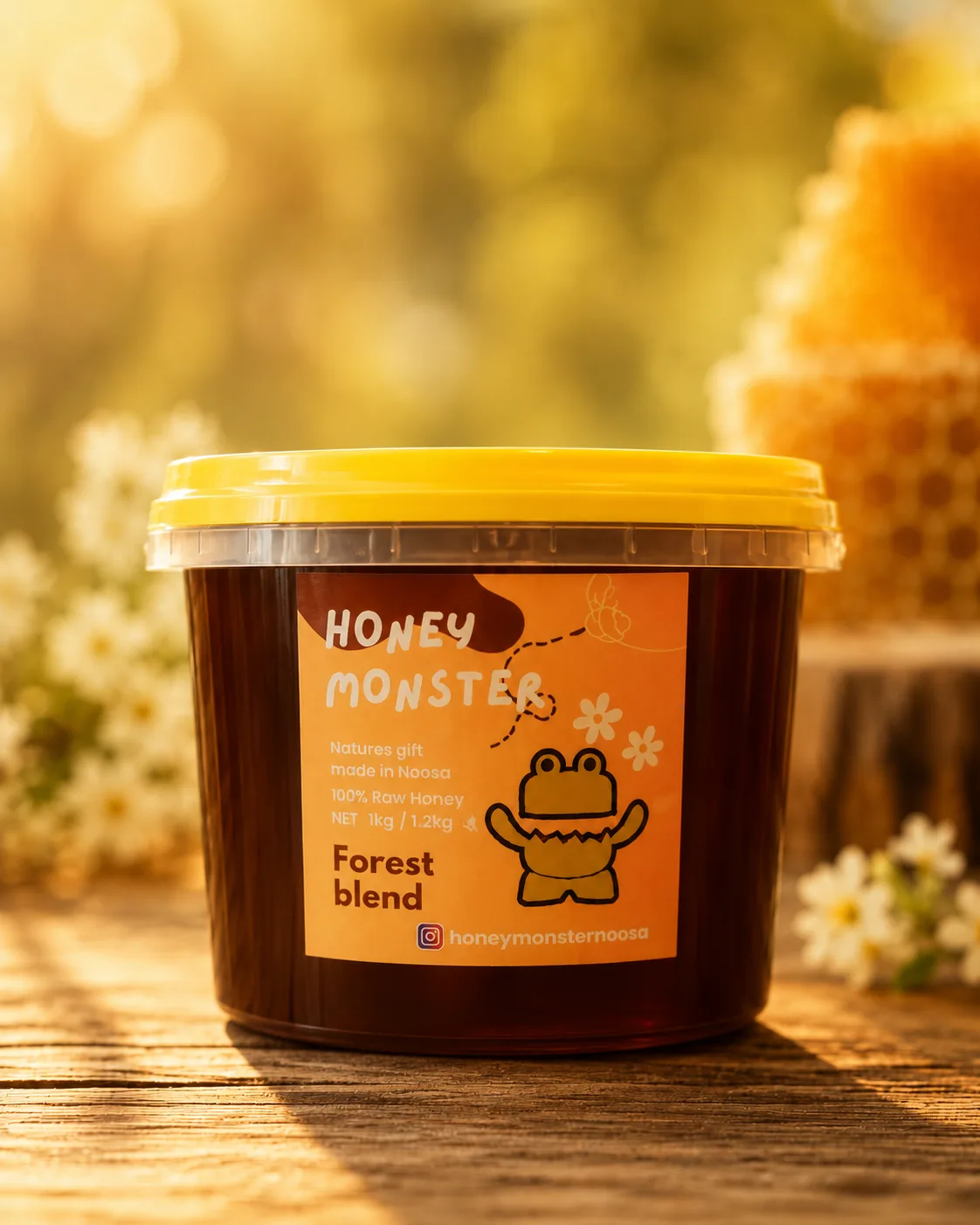
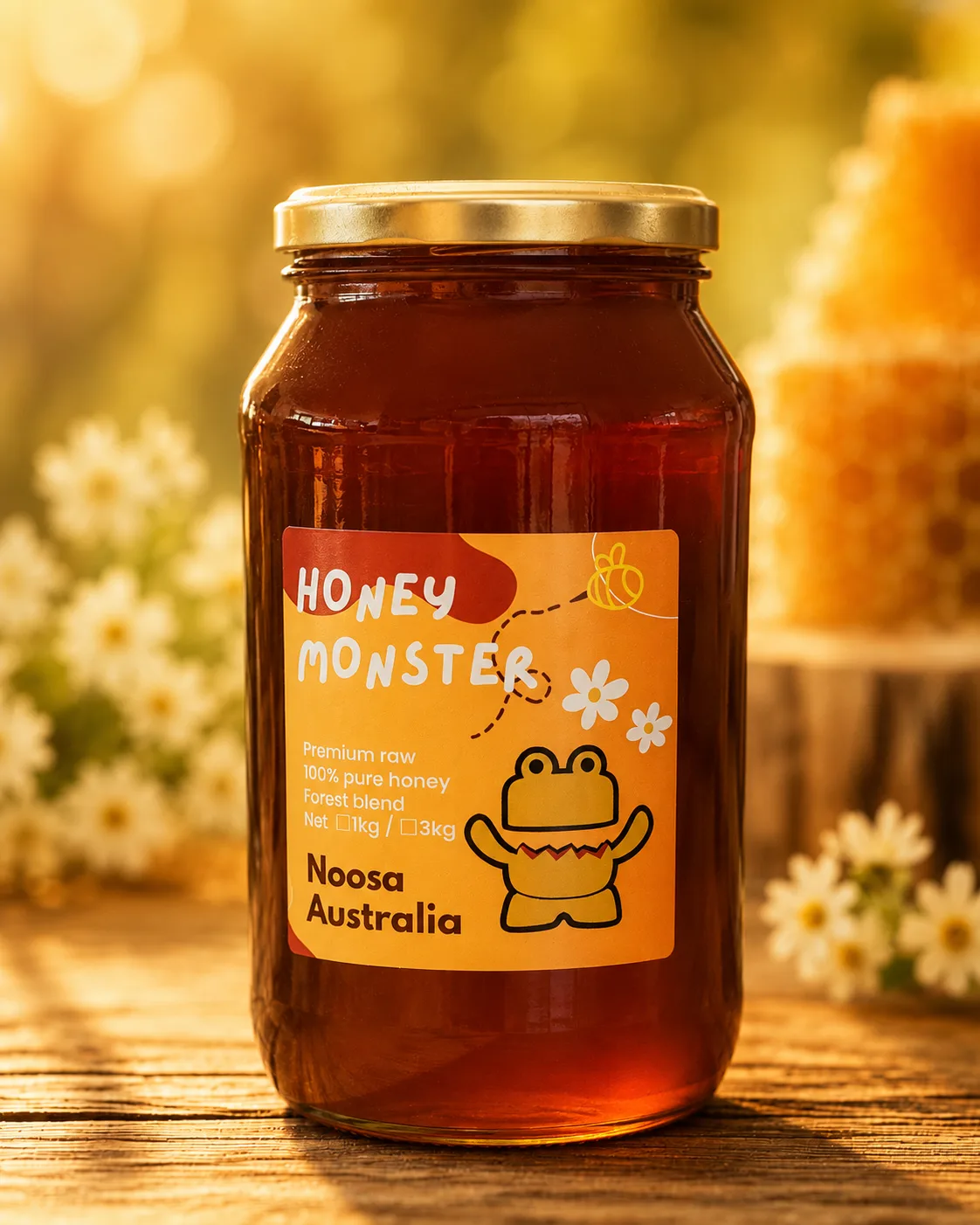
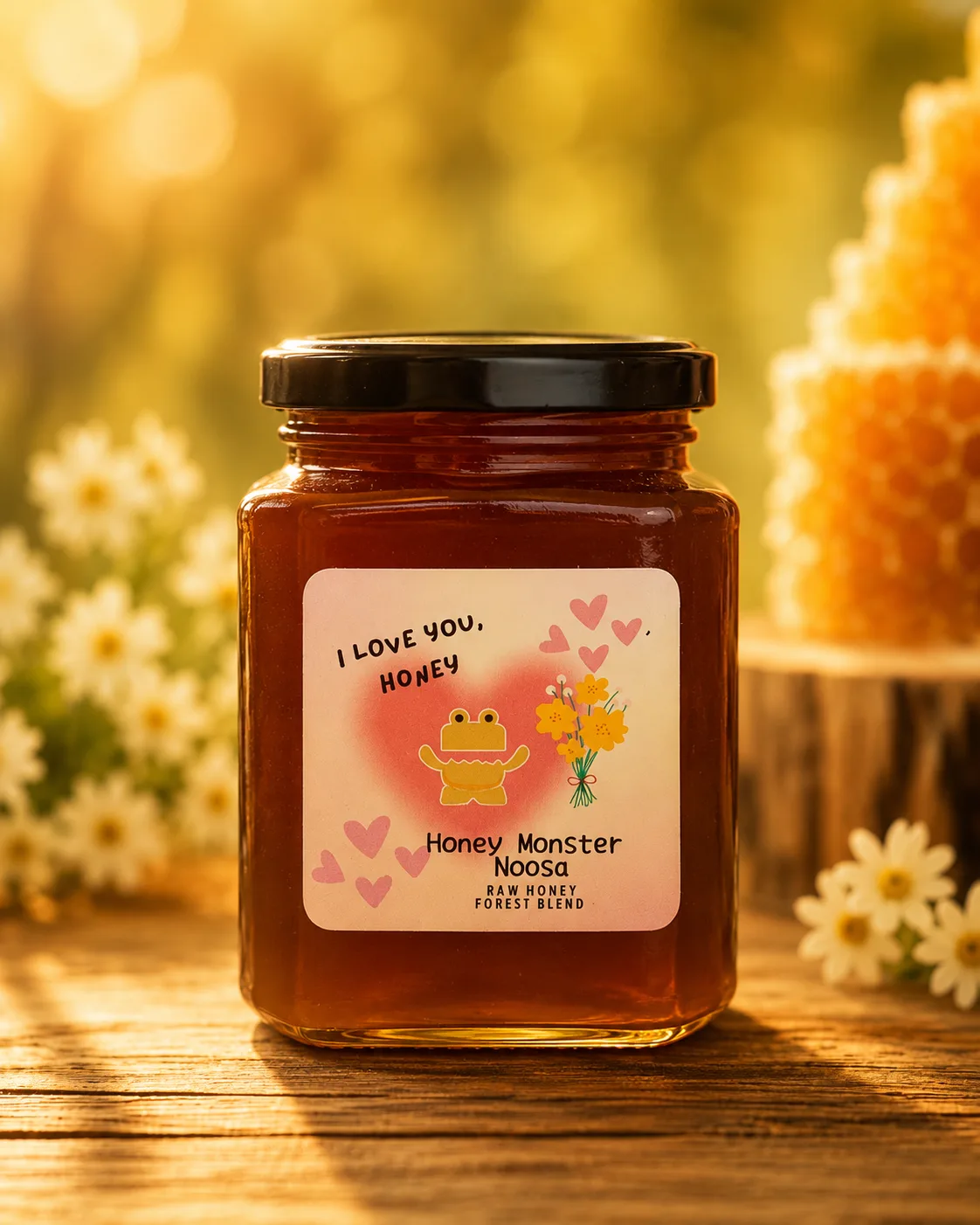
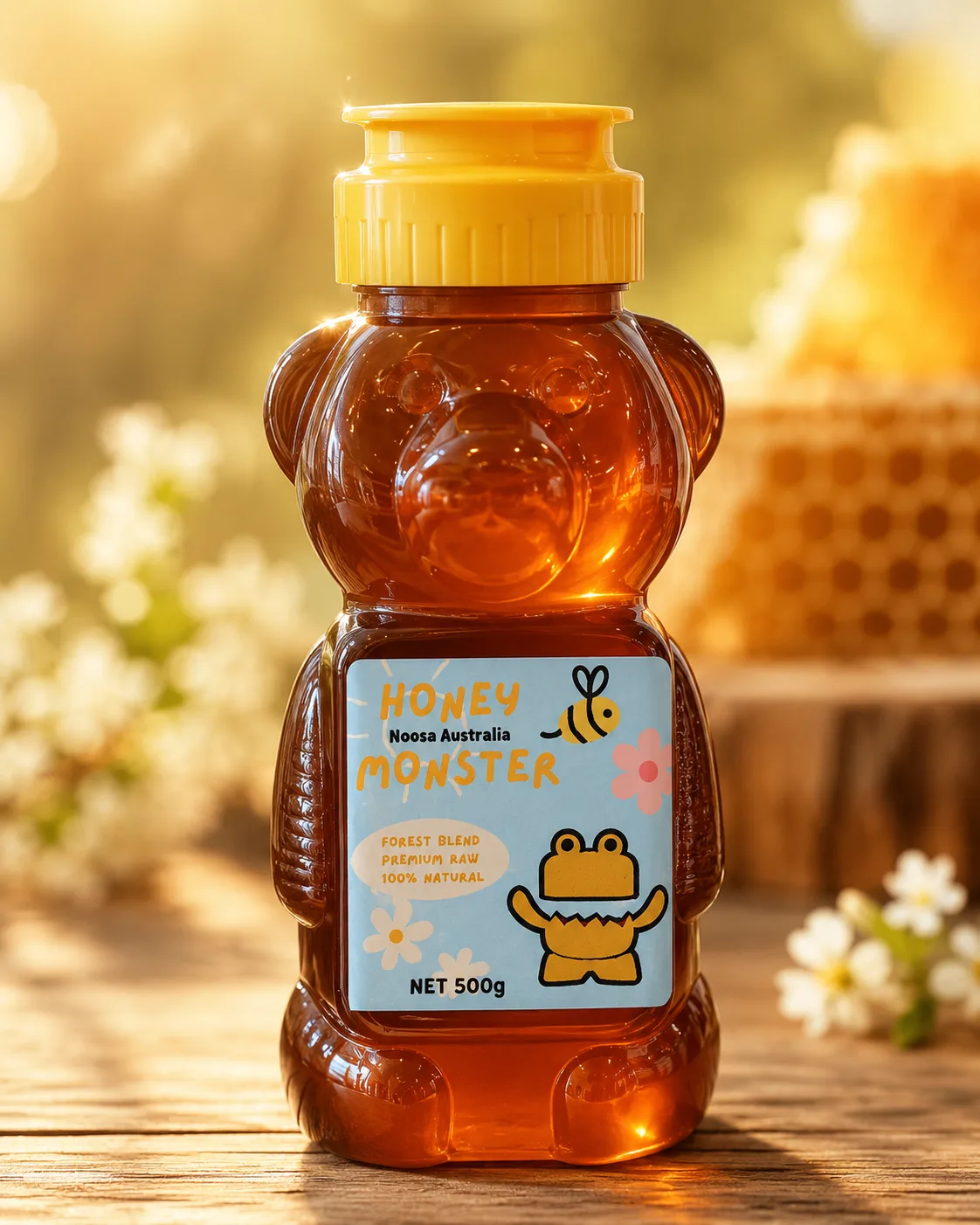
Single-origin raw honey from a few hives in the Noosa hinterland. The bees take care of the logistics; we just bottle it.
60000
bees per hive (peak summer)
17%
water left in the honey (nectar starts at 80%)
2000000
flowers per jar (give or take)
Fresh from the comb
Shop the collection.
Our Hives
Bees in the trees.
The bees tell us when a frame is ready: they cap the cells with wax once the honey has dried down enough to keep. We wait for that, lift the frame out, slice the caps off, and spin it in an extractor until the honey runs out. One pass through a coarse strainer takes out the wax, and it goes in the jar. We strain it — we don't filter it. Fine-filtering takes heat and pressure, and it strips the pollen out, and pollen is the part that proves where a honey actually came from. A beehive sits at about 35°C, and ours never gets warmer than that. The pollen stays, origin and all.
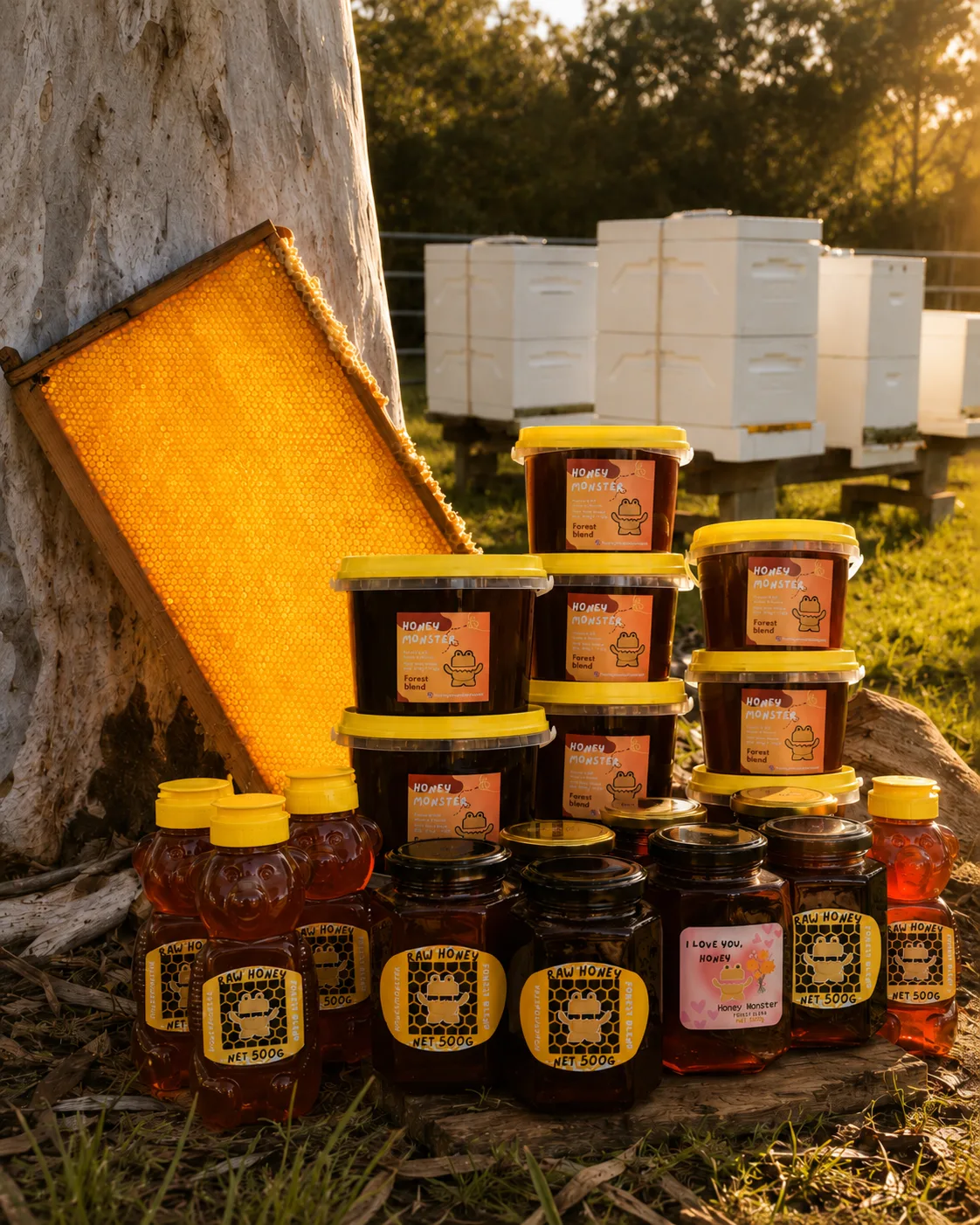
Each bee works a radius of three to five kilometres around its hive and brings back whatever's in flower that week. We don't plant anything for them, and we don't truck the hives off to sit on a single crop — so the honey carries whatever the surrounding bush was doing, not a recipe we set. Put the same hives somewhere else and you'd get a different jar.
What's in the jar shifts through the year. Spring leans on the eucalypts — paler, runnier, a bit of citrus on the finish. By autumn the banksia, bloodwood and tea-tree take over and the colour deepens to caramel. We don't blend one batch into another to even it out — but the bees blend plenty themselves. They'll run one flowering into the next, and a frame they started in summer and left uncapped might not get finished until autumn. Whatever's in the comb when we pull it is what goes in the jar. The difference between this season's honey and last season's is the point, not a problem. If you want something identical every jar, raw honey from a single hinterland apiary isn't it.
Supermarket honey is heated and filtered so it pours fast and stays clear on the shelf for years. Ours isn't, so it does what raw honey does: it crystallises within a few months. That isn't a fault — it's the test. Heated, filtered honey stays glassy because there's nothing left in it to set. If yours sets, stand the jar in warm water for ten minutes and it loosens back up. There's more on how all of this works on the About page.
In every jar
Capped honey straight off the frame, strained through a coarse mesh to keep the pollen in. That's the whole list.
Never in the jar
Heat above hive temperature. Sugar feed for the bees. Honey trucked in from somewhere else. Blends mixed across seasons to even out the flavour. Additives, fining agents, or anything that didn't come out of a hive.
Bee facts
Things we didn't make up.
01
Nectar comes in at about four-fifths water. The bees fan it down to a sixth with their wings — which is why honey keeps for years and never needs a fridge.
02
A worker bee makes around a twelfth of a teaspoon of honey in her whole life. A jar is a few thousand short careers.
03
The hive holds about 35°C all year, summer or winter. The bees run the heating and the cooling themselves; we don't touch it.
04
A hive works a circle roughly five kilometres across. Everything in your jar was found somewhere inside it.
05
Bees tell each other where the flowers are by dancing — the angle gives the direction, the length gives the distance. We're not making that up.
06
A queen lays close to her own body weight in eggs every day through summer. The workers she's laying will live about six weeks.